
From Concept to Creation: The Power of 3D CAD Design Tools
In the design and engineering world, turning an idea into a real product is a journey full of obstacles, new ideas, and, above all, imagination. Key to this journey is a group of tools that have changed how professionals make their ideas real: 3D Computer-Aided Design (CAD) software. This article examines how these tools have completely changed the design process, from the first idea to the finished product.
Transforming Ideas into Reality
In today’s design and engineering world, turning an initial idea into a finished product involves creativity, accuracy, and technology. At the heart of this process lies a remarkable tool called 3D Computer-Aided Design (CAD) software.
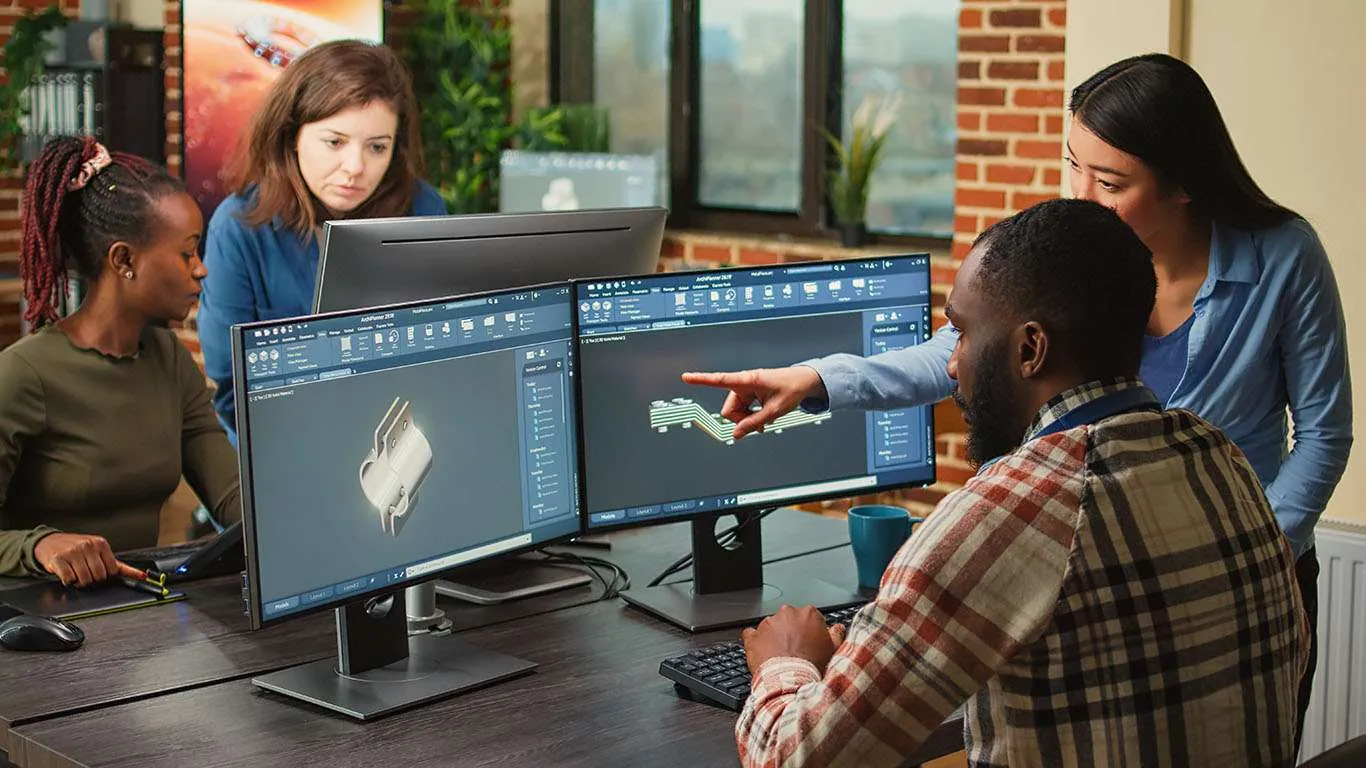
The essence of design lies in its ability to solve problems and enhance the human experience. However, the bridge between conceptualization and realization is fraught with challenges. 3D CAD design is amazing: it helps designers bring their ideas to life in incredible detail and accuracy. Instead of just drawing on paper, 3D CAD lets designers create models in a simulated, three-dimensional world. They can turn, zoom, and take apart these models to see how they work.
The transition to 3D CAD design has heralded a new era in design efficiency. Designers can now iterate on their concepts with a few clicks, enabling rapid exploration of alternatives and refinements. This agility is crucial in the early stages of design, where the freedom to experiment can lead to innovative solutions. Moreover, designers can use 3D CAD models as a foundation for further analysis and simulation. This helps predict a design’s performance under various conditions before building any physical prototype. This saves time and resources and empowers designers to make informed decisions early in the design process.
Accuracy is paramount in the transformation of ideas into physical objects. Even small differences can cause problems later on like things not working right or looking wrong. 3D CAD tools are super accurate, letting designers be precise about sizes and how things fit together. This accuracy ensures that every part of a design fits just right, so the products work as they should. Also, 3D CAD lets designers have a lot of control over their designs. They can be creative and know their tools can handle whatever they come up with.
Enhancing Efficiency and Precision
Switching from traditional design methods to 3D Computer-Aided Design (CAD) software is a big leap forward in design and engineering. This shift isn’t just about using new technology. It’s about embracing a tool that greatly enhances how experts approach the design process.
Old-fashioned design processes used to be difficult, mainly because they depended on hand-drawn drafts and manual math. These ways, although important, had problems with speed and getting things exactly right. 3D CAD software changes this by focusing on digital tools first. This means designers can make and change their designs on a computer instead of paper. Doing things digitally means designers don’t need physical models immediately, so they can quickly make changes and try new ideas. This makes the design process much faster. People can think up, test, and improve ideas in a fraction of the time it took before with old methods.
One of the standout features of 3D CAD software is its ability to facilitate extremely precise design work. 3D CAD design models are not like hand-drawn plans. They’re extremely accurate, even measuring tiny fractions of a millimeter. Being accurate in aerospace, automotive, and medical devices is super important because mistakes can’t happen. 3D CAD software shows every part of a design exactly right, which helps prevent errors that might make products not work properly or be unsafe.
3D CAD software makes work faster for not just one person but also the whole team working on a project. These tools let everyone share and work on designs together, even if they’re far apart. This makes it easier for everyone to understand each other and avoid mistakes. Also, seeing and talking about 3D models helps both technical and non-technical people understand the project better.
Another key advantage of 3D CAD software is its integration with advanced analysis and simulation tools. Designers can subject their 3D models to a variety of simulations. This predicts how the models will perform under real-world conditions. This could include stress tests, fluid dynamics simulations, and thermal analysis. These simulations identify potential issues and opportunities for improvement early in the design process. This optimizes the functionality and durability of the final product. They also enhance the efficiency and precision of the design process.
Fostering Innovation and Collaboration
The arrival of 3D Computer-Aided Design (CAD) software has made designing and engineering much easier. It also encouraged more creativity and teamwork. This special software has changed the old ways of doing things, letting experts explore new ideas.
Innovation thrives in environments where ideas can be freely explored and tested. 3D CAD software helps designers and engineers try out and improve their ideas easily. Unlike making physical prototypes, which take time and money, 3D CAD design lets them quickly try designs in a virtual world. This means they can see, change, and make designs better without using actual materials. It speeds up the process of coming up with new ideas.
3D CAD software is precise and flexible. It lets designers play around with fancy shapes and new materials that would be hard or impossible to use with old-fashioned methods. This has led to lots of new ideas. It’s especially true in airplanes, cars, and medical stuff. Making designs that work well, use less energy, and are good for the environment is super important.
3D CAD software helps people work together even if they are in different places or have different jobs. It lets engineers, designers, and others share, look at, and change designs simultaneously using a computer. This is helpful for big projects that need lots of different skills. We ensure we hear and use everyone’s ideas when we finalize it.
Additionally, sharing 3D models easily has improved communication with clients and stakeholders. This makes it simpler to understand ideas and make smart choices. This openness creates trust and encourages everyone to join in on the design process by giving feedback. This helps in making better results.
3D CAD software has led to improvements in other technology areas, too. One example is how it’s combined with 3D printing. This combination has changed the way companies make prototypes and products. Now, you can make complex designs directly using newer methods that were hard or impossible to create. Design and manufacturing are speeding up the creation of new things through teamwork. It’s also making it easier to customize products and bringing new products to market faster and cheaper.
To stay up to date with us, please follow our Facebook and TikTok pages.